
Find out what is actually limiting your AUM.
A scored, 71-item assessment of how your fund attracts capital, conducted personally by Brian Connell, CFA, a former hedge fund manager. You get a written finding for every item and a ranked plan for what to fix first.
Performance is necessary. It is not sufficient.
Managing a portfolio and raising capital are different disciplines, and few managers excel at both. When AUM lags the track record, the cause is usually specific, structural and diagnosable. Decompose new AUM the way you would decompose returns.
Reach
Qualified prospects who learn about you, inside and outside your network, through commentary, podcasts, speaking and what they find when they search your name.
Public Presence & Reputation · 25%Conversion
The share of those prospects who allocate. Driven by materials that make the case without you in the room, and by disciplined qualification, follow-up and pipeline management.
Messaging & Materials · 35%Expansion
Follow-on capital and introductions from the LPs who already know and trust you. The highest-return capital-raising activity most managers neglect.
Strategy & Execution · 40%Your pipeline has survivorship bias.
You see the meetings you get. You never see the referral who read your deck, visited your website and never called, or the prospect who said “not yet” and was never contacted again.
Those outcomes leave no record, so the usual explanations fill the gap. The CapRaise Diagnostic examines the whole path, including the parts your CRM never captures.
Not a checklist. A scored, written assessment.
Every one of the 71 items is scored against defined anchors or classified, and every item carries a written finding. Below is an anonymized extract from a recent engagement.
From a recent engagement
6insufficient information
12not applicable
Two investor presentations describe the management fee as 1% of committed capital. The LPA, Section 4.4(a), charges 1% of each Limited Partner’s capital account.
Confirm the operative basis and make every investor-facing description match the governing terms.
Your CapRaise Diagnostic includes
- Written preliminary findings before we speak, so the call is spent on what matters
- A working review call with me to discuss the findings and agree on priorities
- An overall score and three-area scorecard, weighted 35 / 25 / 40
- All 71 items scored or classified, with a written finding for almost every item
- A prioritized action plan with 30, 60 and 90-day milestones and longer-term priorities
- A final written report covering everything we discussed
Built like an investment process.
No junior analyst, no template and no generic pitchbook review. I spend 8 to 12 hours on each engagement and hold every score to the same evidence standard.
Coverage
71 items in 19 groups across three weighted areas. Materials, public presence and the capital-raising process itself, including how you work with existing LPs.
Scoring
Each item is scored 1 to 5 against defined anchors, from Critical Gap to Exceptional. The overall score uses unrounded, weighted area averages.
Evidence
Missing evidence is never scored as low. Items I cannot verify are marked Insufficient Information and excluded, so the score reflects what is actually there.
Judgment
I assess every item and write every finding myself. Each finding separates what you report, what your documents show and what I infer.
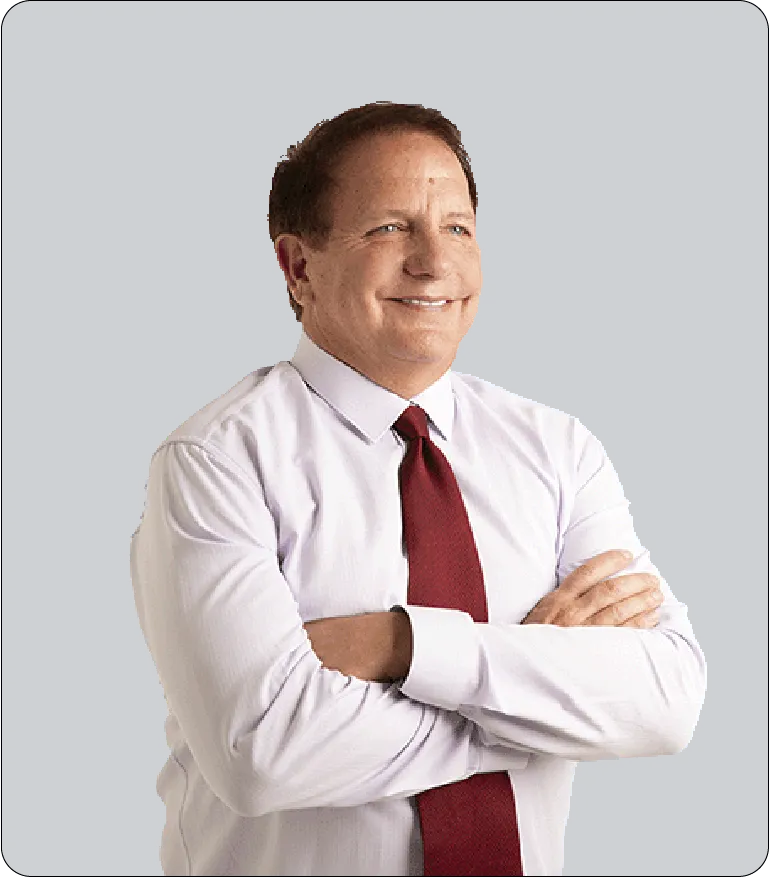
I learned this the hard way.
I'm Brian Connell, CFA, a former sell-side TMT analyst, hedge fund manager, and the founder of StreetFusion, where I personally raised approximately $17 million in equity capital. The company was sold to Thomson Reuters in 2003.
I also founded Marquis Capital Management, a tech-focused L/S equity fund. My partner and I had good performance, but we still had to shut down because we couldn't raise enough outside capital to keep the lights on.
That sort of experience never leaves you.
Back then I didn't understand what raising capital actually required beyond good performance. Now I do. And that hard-won understanding is what I bring to every client engagement.
Four steps. One prioritized action plan.
Confirm and complete your intake
Pay by card, Zelle or wire. We send instructions to upload your investor materials, then a link to the questionnaire. Most managers finish both in 60 to 90 minutes.
The assessment
I review your materials, questionnaire, public presence and process, and score all 71 items. I may send a few clarifying questions.
Preliminary findings and working call
You receive written findings first, then we meet to discuss them, answer your questions and agree on priorities.
Final report and action plan
A written report covering everything we discussed, with a prioritized 30, 60 and 90-day plan and longer-term priorities. Typically delivered 7 to 10 business days after your intake is complete.
- Materials and questionnaire review
- 71-item scored assessment
- Written finding for every item
- Preliminary findings and working call
- Prioritized action plan
- Final written report
Confidential engagement · NDA on request
Built for hedge fund managers under $250M.
The Diagnostic is most useful if two or more of these are true.
A good fit
- Your performance is good or excellent, but AUM growth does not reflect it.
- You have been “about to turn the corner” on AUM for longer than you expected.
- You get meetings, but too few turn into capital commitments.
- Your existing LPs rarely invest more or introduce you to others.
- Your prospect follow-up runs on memory and effort rather than a system.
- You want to know what to fix before spending more time or money raising capital.
Not the right fit
- You want someone to introduce you to investors. I diagnose; I do not place capital.
- You only want a new deck design. The deck is one of 71 things I assess.
Frequently asked questions
Is our work confidential?
Yes. Your information and materials are treated as strictly confidential, and I am happy to sign an NDA before you send anything.
Do I have to hire you to implement the recommendations?
No. The action plan is written so your own team, your existing providers or anyone you choose can act on it. If you want help, I can provide it, but the Diagnostic stands on its own.
How is this different from a deck review?
A deck is one of 71 things I assess. Most capital is lost in places a deck review never looks: what prospects find when they research you, what happens after the first meeting, and whether your existing LPs are ever asked for anything.
How much of my time does it take?
Most managers spend 60 to 90 minutes uploading materials and completing the questionnaire, plus the working review call. The questionnaire saves your progress on the device you start it on, so please finish it on that same computer.
What materials do you review?
Your deck, tear sheet, one-pager, DDQ, website, LinkedIn presence, investor letters, published content and anything else that shapes how investors perceive you and your fund.
How quickly do I receive results?
Typically 7 to 10 business days after you have provided your materials, completed the questionnaire and answered any follow-up questions.
What happens after payment?
You receive instructions for uploading your materials. Once the upload is complete, we send you the questionnaire link, and I begin the assessment when it is finished.
Find out what is actually limiting your AUM.
A confidential, scored assessment of how your fund attracts capital, and a clear plan for what to do about it.

Know What to Fix First
Our CapRaise Diagnostic gives you expert assessment, item-level comments, and a prioritized action plan for improving your capital-raising effectiveness.
Confidential engagement · NDA available on request
QUICK LINKS
LEGAL
Copyright 2026 - Exponential AUM, LLC. All Rights Reserved.